
Remington Gail Keyboard Layout for Hindi Typing
What Remington Gail is, why government exams still use it, and how to prepare for it.
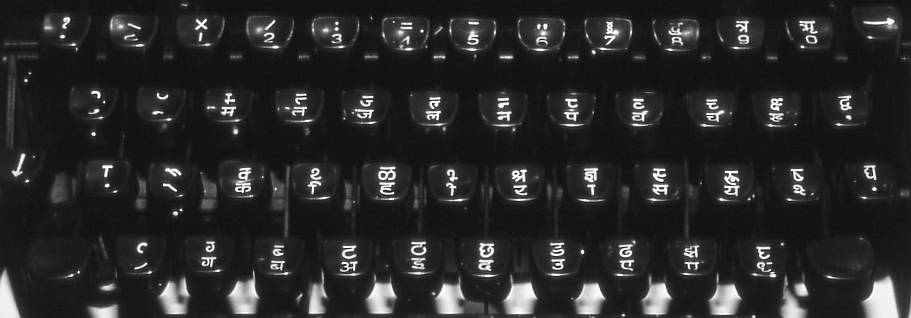
Remington Gail is the layout most people mean when they say "typewriter-style" Hindi typing. It traces back to mechanical Hindi typewriters manufactured by Remington and Godrej, where key positions were chosen for typewriter arm mechanics and fast professional typists, not for any phonetic logic tied to the Devanagari alphabet. That history is exactly why it still shows up in government exam requirements decades later: a large base of trained typists, typing institutes, and exam centres across India standardized on it long before Unicode-era layouts existed, and many recruiting bodies have kept it as an accepted (sometimes the only) option.
Who requires Remington Gail
Several Staff Selection Commission (SSC) posts, a number of state Public Service Commission clerical and data-entry recruitments, and various court and judiciary typist or stenographer exams list Remington Gail as an accepted or required layout, sometimes alongside Inscript as an alternative. Requirements vary by recruiting body, post, and year, so always confirm the exact layout and WPM requirement in your specific exam notification rather than assuming from past exams.
Why it is harder to learn than Inscript
Because key positions are not phonetically grouped, you cannot reason your way to the right key from the sound of a Hindi letter the way you sometimes can with phonetic layouts. Typists traditionally learn Remington Gail the same way English typists learn QWERTY: through repeated practice until finger positions become automatic. Typing institutes that prepare candidates for government exams build their entire curriculum around this muscle-memory approach, usually starting with home-row consonants before introducing matras and conjuncts.
How to prepare
- Use typing tutor software configured specifically for Remington Gail; most exam authorities recommend or provide one, and practicing on a different layout will not transfer directly.
- Build accuracy before speed. Government exams calculate net WPM by penalizing errors, so a slower, accurate typist often outscores a fast, sloppy one.
- Practice on real exam-style paragraphs rather than random words, since exams test continuous passage typing.
- Track your progress over time rather than judging a single session; typing speed improves steadily with consistent short daily practice, not occasional long sessions.
Whichever layout your exam requires, the underlying skills (accuracy, rhythm, and reading ahead of your fingers) transfer between layouts. Our Hindi Typing Speed Test measures your WPM and accuracy on exam-style Hindi passages so you can track that progress regardless of which keyboard layout or software you eventually type on.